
"Korean coffee cups"
600 article(s) found

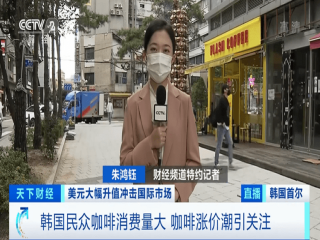
The price of iced American coffee at Starbucks in South Korea has risen sharply. Disposable plastic cups have been banned in Korean coffee shops since April.
In South Korea, drinking a cup of iced American coffee has become one of the indispensable rituals in their daily life. A cup of iced American coffee is refreshing in the morning, a cup of iced American coffee at noon and a cup of iced American coffee in the evening. Even in cold weather, iced American coffee is still in hand every day. Iced American coffee has also become a drain in coffee shops.
The competition in the coffee industry is fierce! There will be a new round of price increases!
Professional coffee knowledge exchange more coffee bean information please follow the coffee workshop (Wechat official account cafe_style) more boutique coffee beans please add private Wechat Qianjie coffee, WeChat: Qjicieex October 5, according to media reports, South Koreans consume an average of 352 cups of coffee a year.

Happy Coast Coffee, leading the trend of Korean Coffee Culture
China's strong economic strength is the cornerstone of the expansion of the coffee market. The expansion of the coffee market depends on the sustained development of the domestic economy and the continuous growth of consumer income. The number of cafes in China has doubled in the past five years from 15898 in 2007 to 31783 in 2012, to about 46000 in 2015. Although coffee is relatively late in China, it has been kept in China for 10 years.

Question: why are Koreans so successful in opening cafes?
What are the most popular cafes in China's first-and second-tier cities in the past two years? The answer is not Starbucks or COSTA, but all kinds of cafes with Feel: coffee with you, coffee from the zoo, coffee from Hollis, coffee from the road, and so on. These cafes have one thing in common: they are all founded by Koreans!

Korean star Buck The coffee bean, a good coffee shop for a free trip.
Professional barista exchanges please follow the coffee workshop (Wechat official account cafe_style) the last day of the Korean trip at the end of August, because I am going to the airport at 6 p.m., so I arrange urban sightseeing itinerary all day, so that I don't have to worry about missing the plane. After visiting the Guangzang market near the East Gate in the morning and circling the Lida campus at noon, L and I had sore legs and were tired.

South Korean December Smart dripping Coffee filter Cup how to use Coffee filter Cup with Saving Water flow
Professional coffee knowledge exchange more coffee bean information please follow the coffee workshop (Wechat official account cafe_style) Smart Cup use skills Smart Cup extraction principle introduction [the first coffee filter cup suitable for saving water] this smart coffee dripping cup can accurately control and adjust the flow of coffee brewing. The flow rate of dripping can be fully controlled, and the same concentration of coffee can be brewed every time.
Starbucks brings its own cup rule 2020 Starbucks will eliminate disposable cups in South Korean stores!
On March 6, Starbucks said it would phase out disposable cups. The plan will now be implemented in all Starbucks stores in South Korea, the fifth-largest market in the world, with more than 1500 stores, and Starbucks expects to phase out disposable cups in all its stores by 2025. Starbucks said: this decision is made to reduce landfills and carbon footprint, which is the company

Latte is also Art: Japan and South Korea "Coffee Prince" Show Latte Flower Highest Level
Professional coffee knowledge exchange More coffee bean information Please pay attention to coffee workshop (Weixin Official Accounts cafe_style) How many kinds of latte latte? The simplest pattern of coffee flower-heart likes to hang around in coffee shop because of its smell and pace, warm and simple decoration makes people put down fatigue instantly. Ask yourself if you don't have rich coffee experience, and you can't drink coffee beans from teeth.

Vintage Korean Cafe Trendy Future Drinks
Professional barista exchanges, please pay attention to coffee workshop (Weixin Official Accounts cafe_style ) During the Japanese rule, Japanese opened tea shops in South Korea and also sold coffee. It was then that coffee shops became popular. In the late 19th century, Kojong of the Joseon Dynasty, while taking refuge in a Russian mansion, fell in love with this unfamiliar Western drink and became the first coffee fanatic. After returning, he
The "Korean Wave" of coffee consumption market is surging.
With the growth of young and fashionable people and the substantial growth of returnees and overseas travelers, coffee culture has developed rapidly in China, and cafes have become a popular place for modern urbanites to gather and relax. Statistics show that coffee consumption in China is growing at an annual rate of 10% to 15%, and the number of cafes has doubled in the past five years. Annual per capita consumption of coffee in Japan and South Korea

Korean Coffee "flameout" Cafe looking for New Hot spot
It is not only Korean coffee that is not optimistic about the development. At the beginning of this year, Diou Coffee, which carries the memories of the post-80s generation in Zhengzhou, closed its Zhenghong flag store on Agricultural Road, and its store on Jingwulu and Wei No.3 Road has also been closed. With the emergence of new coffee, Shangdao Coffee, Genong Coffee and Cross-Strait Coffee, which belong to the same era of Chinese Coffee 1.0, have gradually faded out of consumers' sight. With

Korean "foot skin Coffee" is amazing. Coffee shop employees are exposed to food hygiene problems.
▲ Click to follow | Daily boutique Coffee Culture Magazine Coffee Workshop recently, according to South Korean media reports, South Korean chain coffee shop TheVenti was exposed with food hygiene problems, and some consumers saw the manager grinding his feet in the store, and then went directly to make drinks without washing his hands! Consumers witnessed the picture and put the picture


The coffee consumption market in South Korea still has room to rise.
According to a report on the website of North Korea Daily on September 29, South Korean East and West Foods released the "2013 South Korean Coffee Market Forecast" on the 29th of this month. South Koreans are expected to drink a total of 24.2 billion cups of coffee this year, with an average of 484 cups per person a year. This is an increase of 55% compared with the previous 2000 statistics, accounting for 2.1% of the world coffee market. It is expected today

South Koreans are poisoned by coffee.
Source: global Times [Global Times special correspondent Cui Jietong] Cui, look! Looking along the fingers of Zhu Shenghe, a reporter from South Korea's East Asia Daily, the reporter saw that the three coffee shops were close to each other (pictured), and the lights reflected the rainy night. There are so many coffee shops that we are all poisoned! He said. The place where we stand is Gangnam City Square, Ruicao District, Seoul.

From zoo coffee to coffee to accompany you, why Korean coffee is so successful?
In the past two years, the most popular cafes in China's first-and second-tier cities are no longer street cafes such as Starbucks and COSTA, but all kinds of cafes with Feel: coffee with you, diffuse coffee, zoo coffee, Hollis coffee, coffee on the way, and so on. But do you build it? These cafes have one thing in common: they are all founded by Koreans! Did the Koreans really get the true biography of the coffee god?

Why do Koreans like coffee so much?
Professional coffee knowledge exchange more coffee bean information Please follow the coffee workshop (Wechat official account cafe_style) anyone who has traveled or lived in Korea knows that Korean coffee shops are so! More! Yes! It's not an exaggeration to walk ten meters. Starbucks alone has 1200 stores in South Korea. On the contrary, in China, there are more milk tea shops, but coffee shops are rare.